


TMC Takes: Book Recommendations
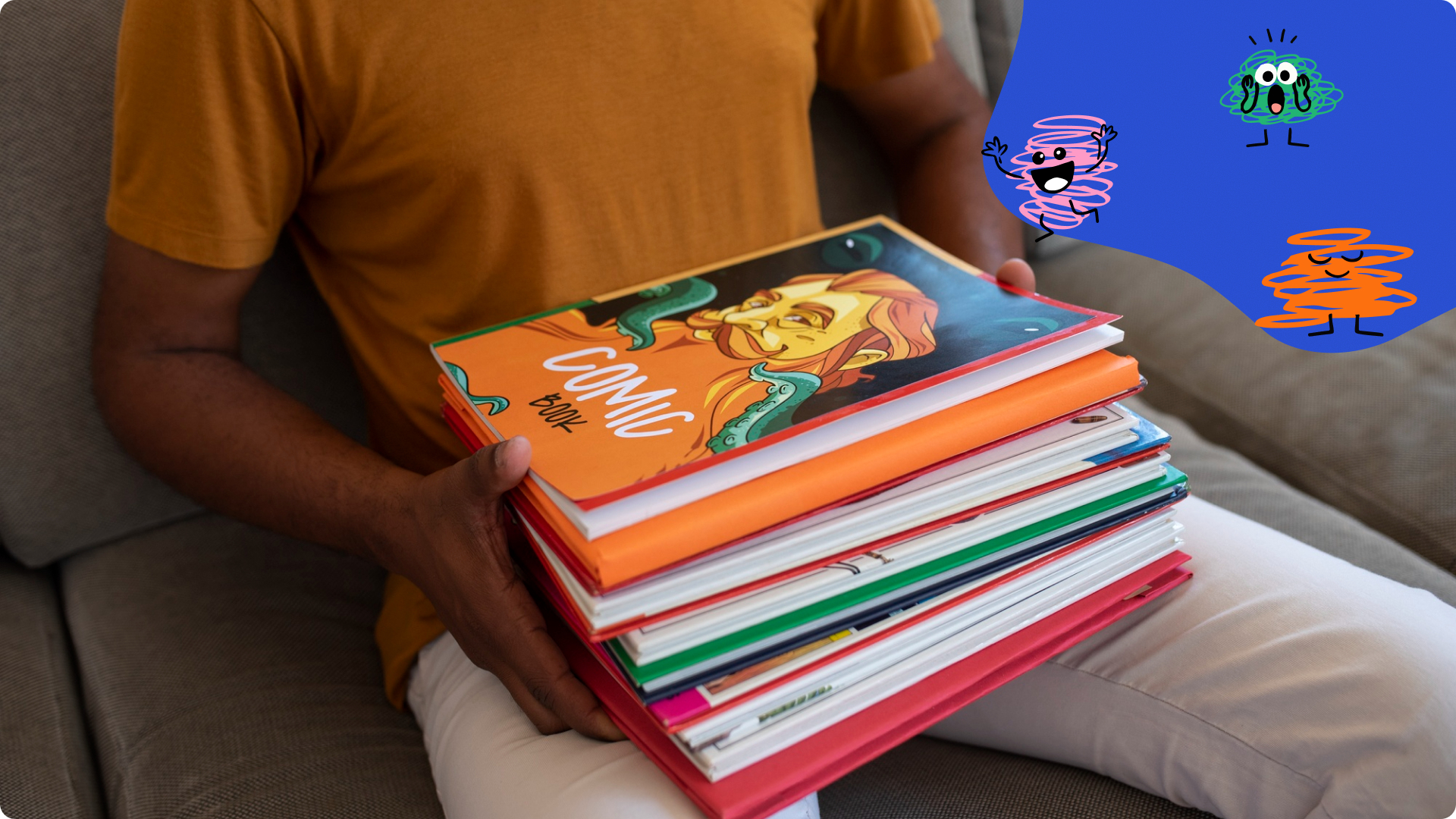
The graphic novel format does something prose can’t quite manage. Sensory overwhelm rendered as colour and noise on the page. Masking shown as a costume change. The inside of a mind made visible through image, not just language.
For neurodivergent readers — especially younger ones — that visual specificity can hit differently. Here are six worth knowing about.
El Deafo — Cece Bell
Bell grew up deaf, wearing a hearing aid called the Phonic Ear that let her hear her teacher from anywhere in the school — including the bathroom. Which was sometimes useful and sometimes profoundly embarrassing. She turned this experience into a graphic memoir of real warmth, honesty, and charm — about what it’s like to navigate a hearing world when your hearing works differently.
Won a Newbery Honor. Appropriate for all ages. One of the most accessible and genuinely delightful stories about difference published in the last decade. Start here if you’re not sure where to start.
Invisible Differences — Julie Dachez & Mademoiselle Caroline
Translated from French. Marguerite is an autistic woman navigating a life that is subtly but persistently wrong — the sensory overload of open-plan offices, the social exhaustion of performing normal, the specific relief of understanding herself after years of not. The visual medium is used brilliantly: sensory overwhelm as colour and texture, masking as a visible performance, the internal world made genuinely visible.
One of the best representations of autistic masking in adults — and specifically in women — available anywhere. Very good for late-diagnosed readers, or for parents trying to understand what their autistic daughter’s day actually feels like.
All the Way to the Top — Annette Bay Pimentel & Nabi H. Ali
The true story of Jennifer Keelan, a nine-year-old with cerebral palsy who, in 1990, crawled up 83 steps of the US Capitol building to demand the passage of the Americans with Disabilities Act. Short, powerful, beautiful, and a reminder that the world can be changed by people who refuse to accept it as it is.
Good for young readers. Good for all readers.
The Golden Hour — Niki Smith
A nuanced, visually gentle exploration of anxiety, belonging, and identity through a neurodivergent-coded lens. Smith handles emotional complexity without over-explaining it — the images carry a lot of the weight.
Hocus and Pocus — A.R. Capetta
Neurodivergent-coded storytelling wrapped in friendship, creativity, and emotional regulation themes. More playful in tone than others on this list — a good choice for younger readers who want story alongside the representation.
Monster — Walter Dean Myers
Not explicitly neurodivergent, but the framing — around perception, misunderstanding, and the gap between who someone is and how they’re seen — resonates strongly with many neurodivergent teens navigating systems that have already decided what they are. An important book in a different register.
The graphic novel format, specifically, has something to offer neurodivergent readers who find sustained prose difficult — whether because of dyslexia, attention, or processing differences. These aren’t consolation-prize books. They’re good books that happen to work differently. Worth having in every school library.
TMC Takes: we recommend it because it’s good, not because it’s popular.